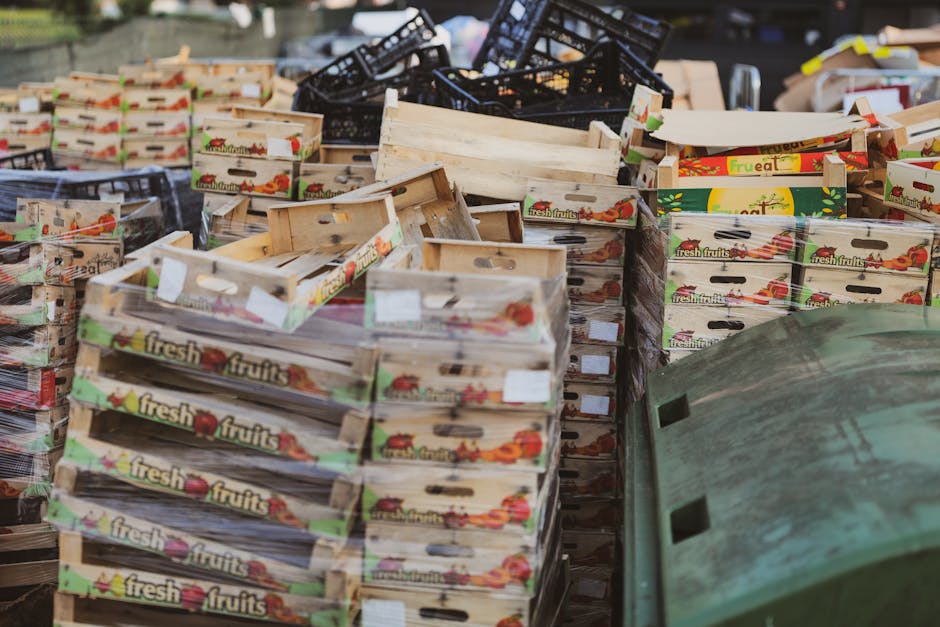
Shepherds Bush Market Rubbish Removal Guide for Traders
If you trade at Shepherds Bush Market, rubbish does not stay a minor background issue for long. It builds up fast: packaging from fresh stock, broken crates, cardboard, old display materials, damaged produce, food waste, and the odd bulky item that seemed harmless at the start of the week. This Shepherds Bush Market Rubbish Removal Guide for Traders is designed to help you deal with waste in a way that is quick, tidy, compliant, and realistic for a busy market day.
Let's face it, market trading is already a juggling act. You are serving customers, keeping stock moving, protecting your pitch, and trying to stay organised while people pass close by. Waste management should support that, not get in the way. In this guide, you will find a practical process for clearing trader waste, reducing clutter, handling awkward items, and choosing the right removal approach for your stall or unit. No fluff. Just the stuff that helps.
Table of Contents
- Why Shepherds Bush Market Rubbish Removal Guide for Traders Matters
- How Shepherds Bush Market Rubbish Removal Guide for Traders Works
- Key Benefits and Practical Advantages
- Who This Is For and When It Makes Sense
- Step-by-Step Guidance
- Expert Tips for Better Results
- Common Mistakes to Avoid
- Tools, Resources and Recommendations
- Law, Compliance, Standards, or Best Practice
- Options, Methods, or Comparison Table
- Case Study or Real-World Example
- Practical Checklist
- Conclusion
- Frequently Asked Questions
Why Shepherds Bush Market Rubbish Removal Guide for Traders Matters
Market traders work in tight spaces, often with little room for overflow. A single messy corner can quickly become a problem for customers, neighbouring traders, and anyone moving stock around. Even a small pile of waste can make a stall look tired, cramped, or badly run. That first impression matters more than people sometimes admit.
There is also the practical side. When rubbish is left too long, it creates trip hazards, attracts pests, gets in the way of cleaning, and makes end-of-day pack-down slower than it should be. In a place like Shepherds Bush Market, where space and timing are both precious, rubbish removal is not a side task. It is part of day-to-day trading discipline.
For many traders, the challenge is not generating waste. It is handling it consistently. You may have cardboard one day, packaging film the next, then broken shelving, old signage, or unsold stock that needs to be removed properly. A reliable system keeps the pitch calm and predictable. That calm counts.
There is another angle too: customer trust. People notice whether a stall feels clean and cared for. They notice if waste is stacked neatly or left to drift around the back. You do not need perfection. But you do need control. The difference is obvious, especially on a busy Saturday when the market is full and the air smells of coffee, produce, and a bit too much damp cardboard.
Expert summary: Good rubbish removal for traders is less about doing one big clear-out and more about building a repeatable routine that keeps your pitch safe, tidy, and commercially presentable.
How Shepherds Bush Market Rubbish Removal Guide for Traders Works
At its simplest, trader rubbish removal is a flow problem. Waste comes in, gets sorted, gets stored safely for a short time, and then leaves the site in a controlled way. The details change depending on your trade, your pitch size, and what kind of waste you produce, but the logic is the same.
Most traders benefit from separating waste into a few practical groups:
- General waste such as mixed rubbish, broken items, and non-recyclable packaging
- Cardboard and paper from stock deliveries and product wrapping
- Recyclables like clean plastic containers, tins, or similar materials where suitable
- Bulky waste such as shelving, damaged fixtures, crates, and display units
- Special waste including hazardous items, electricals, or food-related waste that needs extra care
Once you know what type of waste you are dealing with, the next question is how quickly it needs to leave. Some traders can manage waste with daily bag-out and collection routines. Others need a more responsive service, especially if stock changes often or if a pitch produces bulky packaging. If you deal with furniture, display fixtures, or refurbishments, it may be worth looking at business waste removal alongside broader waste removal options.
There is also a timing element. Trader waste works best when removal is planned around market rhythm rather than bolted on afterwards. Early morning loading, quieter midweek windows, or close-of-day collection can make the whole process feel much less chaotic. A rushed clearance in the middle of trading, with customers stepping around sacks and a trolley squeaking in the background, is nobody's favourite scene.
In some cases, a trader may also need specialist services. Old refrigeration units, damaged appliances, and mixed items from refresh setups should be handled separately. If that is part of your setup, it is sensible to review fridge and appliance removal and, where needed, hazardous waste disposal. Not every item can simply be thrown into a general load, and it is better to check than guess.
Key Benefits and Practical Advantages
When traders put proper rubbish removal in place, the benefits show up in more than one way. Some are obvious. Some creep up quietly over time.
- Cleaner presentation: A tidy pitch looks more reliable and more professional.
- Safer working space: Less clutter means fewer trips, slips, and awkward manoeuvres with stock.
- Faster end-of-day closing: Waste already sorted saves time when the market starts winding down.
- Better neighbour relations: Traders who keep waste under control tend to create fewer headaches for everyone nearby.
- Lower risk of pest issues: Especially important where food packaging or organic waste is involved.
- Less mental load: This sounds small, but not having rubbish everywhere makes the stall feel easier to manage.
There is also a commercial upside that traders sometimes underestimate. Customers read the stall before they read the signage. They see whether the space is looked after. A neat waste routine does not guarantee more sales, of course, but a messy, overloaded pitch can quietly do the opposite. It just can.
If your waste includes reusable or unwanted stockroom items, it can be worth planning a broader clearance rather than treating each item separately. Services such as furniture disposal or furniture clearance may help where shelves, display pieces, or worn fixtures are taking up room. For traders who also use nearby storage, garage clearance or office clearance can be relevant as well.
Who This Is For and When It Makes Sense
This guide is useful for a wide range of traders, not just those dealing with heavy waste. You might run a food stall, clothing pitch, household goods setup, small retail unit, seasonal stand, or mixed-use trading space. If your operation produces waste that needs sorting, storage, movement, or removal, this applies to you.
It makes sense especially when:
- You are generating more rubbish than your current routine can comfortably handle
- You are preparing for a stall refresh, refit, or stock changeover
- You have bulky packaging or broken items that are awkward to store
- You need to keep the pitch presentable during trading hours
- You share access routes or loading points and need to avoid blocking them
- You want a more predictable system rather than last-minute tidy-ups
It also matters for traders who work across multiple spaces. A business owner might manage the market pitch, a backroom store, and a small office somewhere else. In that case, waste management should be joined up. A trader who keeps the pitch tidy but lets old paperwork, packaging, and broken stock gather elsewhere is still carrying the same problem, just in a different room. If that sounds familiar, confidential shredding may also be worth considering for documents that should not go into general waste.
And yes, even one-off traders benefit from a plan. If you are only at the market for certain days or seasons, waste can pile up faster than expected. A busy event weekend can create more rubbish in a few hours than a quiet trader produces all week. That is usually when people say, a bit late, "we should have sorted this sooner."
Step-by-Step Guidance
If you want a simple way to get on top of trader waste, use this process. It is practical, not fancy, and that is the point.
- Walk the pitch and identify waste types. Look for cardboard, packaging, damaged items, food waste, and anything that needs special handling.
- Separate what can be recycled. Clean cardboard is usually easier to manage than mixed rubbish, and keeping it separate helps later.
- Set a clear holding point. Choose one area for waste so it does not spread into customer-facing space.
- Decide what can stay and what must go now. Do not let broken fixtures or unusable stock sit there "for later" unless there is a real plan.
- Check for special items. Electricals, refrigeration, sharp items, or anything potentially hazardous should be flagged early.
- Book the right removal method. Use a service that matches the volume and type of waste you actually have.
- Clean the area after removal. Sweep, wipe, and reset the pitch so the next day starts clean.
That final reset is worth more than people think. A quick sweep removes dust, broken tape, wrappers, and those tiny bits of packaging that always seem to multiply by the end of the day. Very annoying, but there we are.
If you are planning a larger one-off clear-out, think beyond bags and bins. A trader fit-out can create mixed waste that includes timber, fixtures, packaging, and old displays. In those situations, a specialist service such as builders waste clearance may be more suitable than a standard collection. For more general needs, start with business waste removal and adjust from there.
Expert Tips for Better Results
After enough clear-outs, a few patterns become obvious. The traders who stay on top of rubbish are rarely the ones doing heroic last-minute scrambles. They are the ones with small habits that add up.
- Use the same waste point every time. Consistency matters more than a clever system that nobody remembers.
- Flatten cardboard immediately. It saves space and makes the stall feel less cramped.
- Keep a short list of special items. Know in advance what needs separate handling.
- Pair clear-outs with stock checks. If an item is damaged or unsellable, remove it before it becomes "background clutter".
- Plan around weather. Wet cardboard, rain-soaked packaging, and muddy waste are harder to handle and messier to move.
- Make one person responsible. Even in a small team, someone should own the final check. Otherwise things get forgotten. Every time.
One genuinely helpful approach is to treat waste like stock movement. It has a route, a destination, and a deadline. That mindset makes it easier to manage than thinking of it as random rubbish. It sounds simple, because it is.
For traders who regularly replace equipment or tidy up storage, combining waste removal with other clearance work can be efficient. A stall upgrade might also involve loft clearance if stored items have been sitting untouched for ages, or home clearance if the operation is run from a live-work space. When spaces overlap, the clutter tends to do the same.
Common Mistakes to Avoid
Most waste problems in markets are not dramatic. They are small decisions repeated badly. A bit left here, a bag stacked there, a broken pallet pushed aside until tomorrow. Then tomorrow becomes next week.
- Leaving waste until closing time every day. By then the stall is already tired, and the job feels bigger than it is.
- Mixing everything together. Once waste is muddled, sorting becomes slower and more expensive.
- Ignoring bulky items. One damaged cabinet or display unit can take up more room than twenty bags.
- Using the wrong disposal route. Not all waste belongs in the same collection.
- Blocking access routes. This creates frustration for neighbours and may cause safety issues.
- Forgetting about breakables or sharp edges. People get careless when they are in a hurry. That is when cuts and mishaps happen.
A quieter mistake is assuming waste will stay manageable if sales are strong. In reality, busy days often produce more packaging, more stock turnover, and more breakage. The busier the pitch, the more disciplined the waste routine needs to be. Strange but true.
If you use appliances, display chillers, or storage equipment, do not treat them like ordinary rubbish when they fail. That is where specialist handling comes in, and why services such as fridge and appliance removal can be useful. If an item contains anything potentially risky, check before you move it.
Tools, Resources and Recommendations
You do not need a warehouse full of equipment to manage trader rubbish well. A few practical tools make a big difference.
| Tool or Resource | Why It Helps | Best For |
|---|---|---|
| Heavy-duty sacks | Contain general waste safely and reduce spill risk | Daily rubbish and packaging |
| Flattening knife or cutter | Makes cardboard easier to break down | Stock deliveries and box waste |
| Marked storage crate | Keeps recyclables separate and visible | Cardboard, clean plastic, and sorted items |
| Hand truck or trolley | Helps move heavier waste without strain | Bulky bags, crates, and fixtures |
| Gloves and basic PPE | Protects hands from sharp or dirty items | General handling and end-of-day clear-up |
| Scheduled removal service | Prevents build-up and keeps the pitch under control | Recurring business waste and one-off clearances |
If you are planning removal in advance, it also helps to think about quote clarity and payment convenience. A transparent, no-nonsense arrangement matters because traders need to know what is being removed and when. For that reason, pages like pricing and quotes and payment and security can be useful when you are comparing options or setting expectations.
For traders who care about the environmental side as well, look at recycling and sustainability. In practice, this can mean separating recyclables more carefully, reducing avoidable waste, and choosing a disposal approach that keeps reusable material out of general rubbish where possible. Not every item can be recycled, of course, but many can be handled better than people assume.
And if you are trying to work out what can safely go into a mixed load or skip-style collection, what can go in a skip is a sensible place to sanity-check the basics before you book anything.
Law, Compliance, Standards, or Best Practice
Waste handling for traders is not only a cleanliness issue; it is also a duty-of-care issue. In the UK, businesses are generally expected to manage waste responsibly and use legitimate disposal routes. The exact details can vary depending on the material, but the principle is constant: do not dump waste, do not mix unsuitable items carelessly, and do not leave potentially hazardous material in the wrong place.
For traders, the practical best practice is fairly straightforward:
- Keep waste stored securely and away from customer access where possible
- Separate recyclables, general waste, and any special waste streams
- Use a provider or method that is appropriate for the type of waste you generate
- Keep records or confirmations where sensible for business administration
- Take extra care with sharp, wet, odorous, or potentially hazardous items
If your waste includes confidential paperwork, electronic items, food-related waste, or equipment with components that should not be mixed into ordinary rubbish, err on the side of caution. A small check now can save a messy problem later. You do not want a pile of mystery waste sitting behind the stall all afternoon looking like it has opinions.
It is also worth aligning your process with site rules, market expectations, and any operational guidance you receive locally. Even where the law gives broad direction, the market environment itself can be stricter in practice because access, safety, and shared working space all matter. The safe approach is usually the simplest one.
To support your wider business setup, you may also want to review health and safety policy, insurance and safety, and, if you are expanding or updating premises, builders waste clearance. Those pages sit naturally alongside trader waste planning because compliance is rarely just one task.
Options, Methods, or Comparison Table
There is no single best waste method for every trader. The right choice depends on volume, item type, frequency, and how much space you have on-site. Here is a simple comparison to help you think it through.
| Method | Best For | Strengths | Limitations |
|---|---|---|---|
| Daily bagging and bin sorting | Small, regular waste volumes | Simple, cheap to run, easy to teach staff | Can fall apart quickly if volume increases |
| Scheduled business waste collection | Ongoing trader waste | Predictable, tidy, good for repeat operations | Needs consistent sorting and storage |
| One-off clear-out | Refits, stock changes, end-of-season clean-ups | Removes bulky clutter quickly | Less efficient for day-to-day waste |
| Specialist item removal | Appliances, hazardous items, unusual materials | Safer and more appropriate for awkward waste | Requires extra planning and correct identification |
For many traders, a hybrid approach works best. Keep daily waste under control with a simple routine, then use a one-off removal service when the pitch needs a reset. That tends to be the sweet spot. Not perfect, but workable, and in real life workable is gold.
If you manage stock or equipment in other locations as well, the same logic applies. For example, a trader who stores furniture off-site might need furniture disposal more than a generic collection, while someone moving old stock from a storage room could benefit from furniture clearance or office clearance. Matching the method to the material is half the battle.
Case Study or Real-World Example
Imagine a trader who sells homeware and seasonal gift items. Over a few weeks, the stall accumulates damaged packaging, crushed boxes, broken display inserts, and a couple of old shelving pieces that were never quite right. Nothing huge on its own. Still, by Thursday afternoon the back corner is cluttered, and the trader has to step sideways just to reach the stock crate.
Instead of waiting until everything becomes a major clear-out, the trader separates waste into three piles: cardboard, general waste, and bulky items. Cardboard is flattened daily. General waste is removed in smaller loads so it does not spill over. The shelving and display pieces are booked for separate removal. One morning, before the market is fully buzzing, the stall is cleared, swept, and reset. The space suddenly looks larger, lighter, and easier to work in.
What changed? Not magic. Just structure.
The trader also notices something else: fewer awkward conversations with nearby stalls, less time spent hunting for lost stock behind rubbish bags, and a better end-of-day routine. It sounds ordinary, but ordinary done well is exactly what makes a market pitch run smoothly.
That is the real lesson here. Trader rubbish removal is not about dramatic transformation. It is about reducing friction. A cleaner pitch usually means a calmer trader. And a calmer trader tends to make better decisions on a busy day.
Practical Checklist
Use this quick checklist to keep your rubbish removal routine tight and manageable.
- Have I sorted waste into general, recyclable, bulky, and special categories?
- Is there one clear holding point for waste on or near the pitch?
- Are cardboard boxes flattened as soon as possible?
- Have I removed anything sharp, wet, or potentially hazardous from ordinary waste?
- Do I know which items need specialist removal?
- Is the waste stored without blocking access routes or customer movement?
- Have I planned removal around quieter periods where possible?
- Is the pitch swept and reset after waste leaves?
- Are staff or helpers clear on who is responsible for the final check?
- Have I reviewed whether a one-off or recurring service makes more sense?
If you can answer yes to most of those, you are already ahead of many businesses that just wing it. Truth be told, a lot of waste problems come from not having a simple system, not from having too much rubbish in the first place.
For traders with mixed items or unusual disposals, it can help to compare services like mattress and sofa disposal if you are clearing soft furnishings, or garage clearance if you are dealing with a storage-heavy reset. The right path depends on the material, not just the volume.
Get a free quote today and see how much you can save.
Conclusion
Trader waste at Shepherds Bush Market does not need to become a daily headache. With a simple sorting routine, the right removal method, and a bit of consistency, you can keep your pitch cleaner, safer, and much easier to work in. That alone makes the trading day feel better.
The most effective approach is usually the one that fits the reality of market life: tight space, fast turnover, shared access, and very little patience for clutter. So keep it practical. Keep it regular. And when bulky, awkward, or specialist waste appears, handle it properly rather than pushing it down the line.
If you want to build a more dependable waste routine for your stall or business, start small, stay consistent, and choose solutions that match the actual mess you create. That is where the real difference comes from. Not perfection. Just a good system, repeated well.
And honestly, once the pitch is clear and the floor is swept, the whole place feels better. You notice it immediately.
Frequently Asked Questions
What counts as trader rubbish at Shepherds Bush Market?
Trader rubbish usually includes packaging, cardboard, damaged stock, food-related waste, broken display items, and general rubbish created during trading. Some items can be recycled or removed separately, while others need specialist handling.
How often should traders arrange rubbish removal?
That depends on how much waste your stall produces. Some traders manage with daily sorting and regular collection, while busier setups need more frequent removal. If waste starts spilling into customer space, the schedule is too loose.
Can I mix cardboard with general waste?
You can, but it is usually not the best idea. Clean cardboard is easier to manage on its own and often takes up far less space when flattened. Separating it also makes the stall tidier and easier to clear.
What should I do with bulky items like shelves or displays?
Bulky items are best removed separately rather than left to clutter the pitch. Furniture-style items, fixtures, and display pieces may need a specific clearance approach depending on what they are made of and how large they are.
Are there items traders should never put in general waste?
Yes. Items that may be hazardous, electrical, or otherwise unsuitable for ordinary disposal should be checked before removal. If you are unsure, treat the item cautiously and confirm the right method first.
Is rubbish removal different for food traders?
Usually, yes. Food traders often deal with organic waste, packaging, and hygiene-sensitive materials, so they need a cleaner and more frequent routine. Odour, pests, and spill control become much more important.
How can I keep my stall tidy during trading hours?
Use one waste point, flatten packaging as you go, and avoid leaving loose items behind the counter. Small, regular clearing is far easier than one huge tidy-up later on. That little habit saves a lot of grief.
What is the best option for a one-off market clear-out?
A one-off clear-out is usually best when you are changing stock, replacing fixtures, or resetting the pitch. The right method depends on what you need removed, but a planned clearance is normally better than trying to do it in stages.
Do traders need to think about compliance when clearing waste?
Yes. Businesses should manage waste responsibly, keep it secure, and use the correct disposal route for the material. Special items, confidential waste, and hazardous materials need extra care.
How do I know whether I need a business waste service or a one-off clearance?
If the waste is recurring and predictable, a business waste service usually makes more sense. If you are clearing out a build-up, moving stock, or dealing with bulky items, a one-off clearance may be the better fit.
Can rubbish removal help improve sales?
It can support sales indirectly by making the pitch look cleaner, safer, and more professional. Customers may not comment on it, but they absolutely notice when a stall feels organised and well looked after.
What should I do before booking rubbish removal for my stall?
Make a quick list of what needs removing, separate anything special or hazardous, and think about how much space the waste takes up. That makes the job clearer, quicker, and usually more cost-effective.